
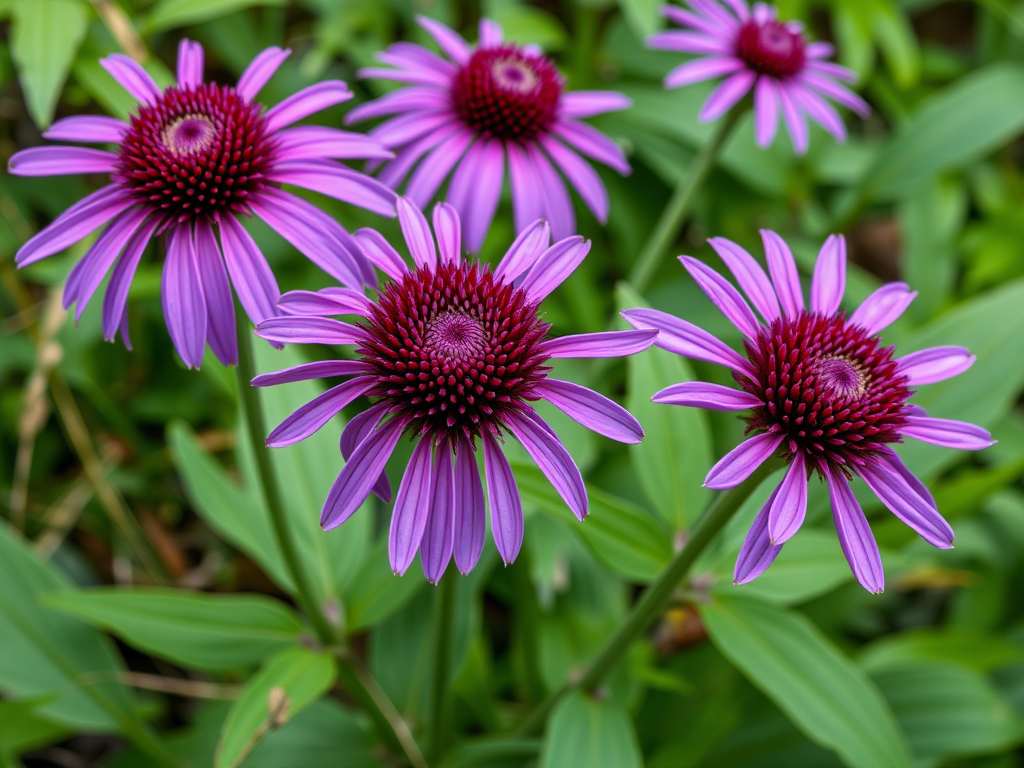
Echinacea, also known as coneflower, is a vibrant purple herb native to North America and long revered by Native American tribes for its potent healing properties. Most commonly used to support immune function, echinacea works by activating key white blood cells and increasing the body’s natural defense mechanisms. It’s especially popular during cold and flu season, often taken as a tea, tincture, or capsule to shorten the duration and intensity of illness.
What makes echinacea unique is its ability to modulate, rather than overstimulate, the immune system. It contains a range of active compounds including alkamides, polysaccharides, and caffeic acid derivatives that work synergistically to fight off infections. Recent studies have shown that echinacea may also have anti-inflammatory, antiviral, and even mild pain-relieving properties. This makes it a go-to herb not only for immune support, but for wound care, sore throats, and general immune rebalancing.
While echinacea is generally considered safe for short-term use, it’s best used at the first sign of infection or as a preventative in cycles. For optimal results, look for high-quality extracts of Echinacea purpurea or Echinacea angustifolia, and pair with rest and hydration. As with any herb, consistent use, proper dosage, and purity matter most. In a world full of synthetic options, echinacea remains a trusted ally—simple, powerful, and straight from the earth.
 davidorman.com