Blog

Health Question of the Week 6/20/25

QUESTION: “Can stinging nettle actually reverse seasonal allergies—and if so, how should it be used for best results?”

ANSWER: Yes, stinging nettle (Urtica dioica) can significantly reduce symptoms of seasonal allergies due to its natural antihistamine and anti-inflammatory properties. Unlike pharmaceutical antihistamines that often cause drowsiness or dehydration, nettle works by stabilizing mast cells and blocking histamine receptors in a more balanced, gentle way. It’s especially effective for hay fever, sinus congestion, itchy eyes, and sneezing—making it one of the most underrated remedies for spring and fall allergy seasons.

To get the best results, timing and form matter. Freeze-dried nettle capsules are often considered the most effective, as they preserve the plant’s active compounds. A typical dose is 300 mg twice daily, started at least 2 weeks before allergy season begins. Some people prefer nettle tea, using 1–2 teaspoons of dried leaves steeped for 10 minutes—but this form is gentler and better for mild symptoms or long-term support. Tinctures are also an option for faster absorption.

Stinging nettle can also be paired with quercetin, vitamin C, and local raw honey to amplify its effects. Importantly, it supports the body rather than suppressing it—making it a prime example of natural medicine’s philosophy: balance over force. As always, those with kidney issues, blood pressure concerns, or on medication should check with a qualified practitioner before use.

Master Health Quote Thursday: 6/19/25

Shilajit, a sticky, tar-like substance found in the Himalayas and other high mountain ranges, has long been revered in Ayurvedic medicine for its wide-ranging health benefits. One of its most powerful yet lesser-known effects is its ability to support the body’s natural production of nitric oxide (NO), a molecule vital for circulation, energy, and cellular communication. Unlike synthetic NO boosters that often rely on isolated compounds, shilajit provides a full-spectrum mineral matrix that nourishes the body and works in harmony with its natural processes.

Nitric oxide plays a crucial role in vasodilation—relaxing the inner muscles of the blood vessels—which improves blood flow and lowers blood pressure. This has major implications for cardiovascular health, athletic performance, brain function, and even sexual vitality. Shilajit enhances this process by providing fulvic acid and over 80 trace minerals, many of which are necessary cofactors in the enzymatic conversion of L-arginine into nitric oxide. This makes it a holistic and sustainable option for anyone seeking to improve circulation and overall vitality.

What sets shilajit apart is not just its mineral content, but its adaptogenic nature. It helps the body resist stress, stabilize blood sugar, and increase energy at the mitochondrial level—where nitric oxide is also synthesized. This multi-layered support makes it especially valuable for older adults, athletes, and individuals recovering from illness or fatigue. Regular use of high-quality, purified shilajit has been shown to restore strength, increase endurance, and promote clarity of mind.

To integrate shilajit into your routine, a pea-sized amount (typically 300–500 mg) of resin or powder can be dissolved in warm water or herbal tea once daily, preferably in the morning or before exercise. As always, ensure the product is purified and tested for heavy metals. In the realm of natural medicine, few substances deliver such deep nourishment with so little effort. As modern science catches up to ancient wisdom, shilajit stands out as a true master herb for those seeking vitality from the inside out.

Ask Me Anything: June 18, 2025

Question: how does natural medicine use this timing to enhance healing?

Answer: Yes, the time of day you take an herbal remedy can significantly influence its effectiveness. In natural medicine systems like Traditional Chinese Medicine (TCM) and Ayurveda, the body follows rhythmic cycles known as “organ clocks” or dosha cycles that align with nature’s flow. These systems teach that different organs and energetic functions are more active at specific times, and aligning herbal intake with these natural rhythms can optimize both absorption and energetic resonance.

In TCM, for example, the Liver is most active between 1:00 and 3:00 AM, while the Lungs dominate between 3:00 and 5:00 AM. If someone is taking herbs to support liver detoxification, consuming them in the late evening may help prepare the liver for its early-morning activity. Conversely, lung tonics or respiratory herbs may work better when taken upon waking. This is not only due to organ energy but also to how the body’s hormonal and metabolic systems operate in harmony with light, sleep, and digestion.

Ayurveda offers a similar view, structuring the day into three repeating cycles of Vata (movement), Pitta (transformation), and Kapha (stability). A stimulating herb like ginger may be best taken during Kapha time (early morning) to energize and clear sluggishness, while cooling herbs like Brahmi might be more effective during Pitta hours (midday) to calm the fire of digestion or overthinking. The ancient sages viewed the body not as a machine but as a garden responding to the sun, moon, and elements.

Modern chronobiology is beginning to catch up. Studies show that circadian rhythms influence drug metabolism, hormone levels, and even immune response. Natural medicine, which has always observed nature’s timing, now finds scientific backing for what healers have known for thousands of years: timing matters. Healing isn’t just about what you take, but when you take it—because nature works like music, not a stopwatch.

Feverfew: Nature’s Answer to Migraine and Inflammation

Feverfew (Tanacetum parthenium) is a small flowering plant in the daisy family long revered for its potent medicinal properties. Traditionally used in European herbalism, feverfew has earned a strong reputation for its ability to prevent and relieve the intensity of migraines. Rather than simply masking pain, feverfew works at a deeper level by reducing the release of inflammatory substances in the brain, making it a natural and effective ally for those seeking alternatives to pharmaceutical treatments.

Beyond migraines, feverfew is known to ease general aches, arthritis pain, and symptoms associated with inflammation. Its active compounds, particularly parthenolide, help inhibit the production of prostaglandins—chemical messengers that trigger inflammatory responses. This makes it valuable for calming joint discomfort, easing muscle tension, and even helping regulate the body’s internal inflammatory cycles without the harsh side effects often seen with synthetic drugs.

What makes feverfew especially remarkable is its adaptogenic nature—it seems to support the body’s resilience to stress and discomfort over time. When taken consistently in low doses, it builds a cumulative shield against both internal and external triggers that cause distress. As a gentle yet powerful herbal ally, feverfew reminds us that healing often begins with the quiet intelligence of nature, working patiently to restore balance and protect the body from within.

Echinacea: Nature’s Immune Warrior

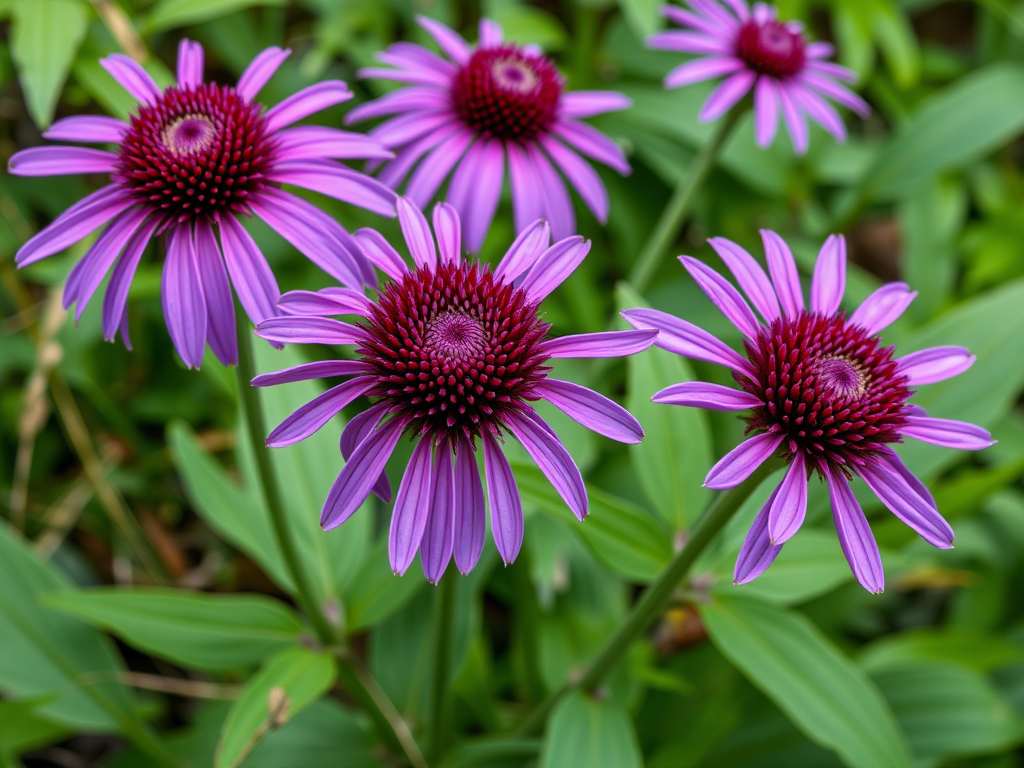
Echinacea, also known as coneflower, is a vibrant purple herb native to North America and long revered by Native American tribes for its potent healing properties. Most commonly used to support immune function, echinacea works by activating key white blood cells and increasing the body’s natural defense mechanisms. It’s especially popular during cold and flu season, often taken as a tea, tincture, or capsule to shorten the duration and intensity of illness.

What makes echinacea unique is its ability to modulate, rather than overstimulate, the immune system. It contains a range of active compounds including alkamides, polysaccharides, and caffeic acid derivatives that work synergistically to fight off infections. Recent studies have shown that echinacea may also have anti-inflammatory, antiviral, and even mild pain-relieving properties. This makes it a go-to herb not only for immune support, but for wound care, sore throats, and general immune rebalancing.

While echinacea is generally considered safe for short-term use, it’s best used at the first sign of infection or as a preventative in cycles. For optimal results, look for high-quality extracts of Echinacea purpurea or Echinacea angustifolia, and pair with rest and hydration. As with any herb, consistent use, proper dosage, and purity matter most. In a world full of synthetic options, echinacea remains a trusted ally—simple, powerful, and straight from the earth.

Reishi: The Mushroom of Immortality

Reishi mushroom (Ganoderma lucidum) has been revered in Traditional Chinese Medicine for over 2,000 years, earning titles such as “Mushroom of Immortality” and “Spirit Plant.” Found growing on decaying hardwood trees, this striking reddish-brown fungus holds a sacred place in herbal medicine due to its potent adaptogenic and immunomodulating properties. It is not consumed for taste or culinary use, but rather as a tonic for longevity, balance, and spiritual vitality.

Modern research supports what ancient healers knew: Reishi helps calm the nervous system, reduce anxiety, improve sleep quality, and support immune function. It contains triterpenes, polysaccharides, and peptidoglycans—bioactive compounds that exhibit anti-inflammatory, antioxidant, and liver-protective effects. Many holistic practitioners recommend Reishi to patients recovering from chronic stress, fatigue, autoimmune imbalances, or even during cancer recovery for its supportive effects on the body’s natural defenses.

Beyond the physical benefits, Reishi has traditionally been seen as a “shen tonic,” enhancing spiritual awareness and emotional resilience. Taoist sages believed it helped cultivate inner peace and a calm, clear mind—key components of a long and harmonious life. Whether brewed as tea, taken in capsule form, or used in tinctures, Reishi remains one of the most respected and profound natural allies for both body and soul.

The Power of Taoist Stillness in a Moving World

Stillness is often misunderstood as mere inactivity. But in Taoist philosophy, stillness is a profound skill cultivated with awareness and discipline. It is not the absence of motion but the conscious control of it. The calm within the storm. When one masters stillness, they can move through life with clarity and strength, rather than reacting blindly to external chaos. It becomes a center point. An internal compass that keeps us grounded regardless of how turbulent the world becomes.

In martial arts and meditation alike, true stillness is not about freezing the body but about calming the spirit. One can move with precision and power while maintaining stillness at the core. This inner stillness guides decisions, enhances perception, and allows us to act with intention. Without this cultivated calm, action becomes noise and movement loses its meaning. Stillness then becomes the very foundation upon which strength is built.

To live with stillness is to walk the path of mastery. It means observing without judgment, responding without force, and acting without ego. The Tao teaches that water is soft yet wears down the hardest rock. Not by force. By presence and persistence. In the same way, stillness allows us to endure, to see clearly, and to move with wisdom. It is not about doing less. It is about doing with purpose. In stillness, we do not escape life. We master it.

Dioscorea: Nature’s Root for Vitality and Balance

Dioscorea, commonly known as wild yam, is a powerful herb that has long been revered in traditional medicine for its rejuvenating properties. Rich in diosgenin, a natural plant steroid, Dioscorea is often used as a natural remedy to support hormonal balance, especially in women experiencing menopausal symptoms. However, its benefits extend beyond hormonal health—it has been shown to support adrenal function, reduce inflammation, and enhance energy levels, making it a potent tonic for daily vitality.

In Chinese medicine, Dioscorea is classified as a spleen and kidney tonic, often used to strengthen digestion and fortify the body’s core energy. Its starchy, nourishing tubers help stabilize blood sugar levels, reduce fatigue, and support healthy joint function. Because of these balancing effects, Dioscorea is frequently included in formulas designed for chronic weakness, poor appetite, or those recovering from illness. It works gently but steadily, enhancing the body’s ability to absorb nutrients and restore inner harmony.

Modern herbalists recognize Dioscorea as a bridge between physical nourishment and hormonal regulation. Whether used in powdered form, tincture, or as part of an herbal compound, it supports both structure and subtle energy within the body. As research continues, Dioscorea stands out as a symbol of how natural medicine can enhance strength, flexibility, and clarity—offering a grounded, plant-based path to long-term health and renewal.

The Living Stream: A Unique Journey Through the History of Taoism

Taoism flows not from a single historical moment but from the deep wellspring of ancient Chinese wisdom. Its origins are lost in mist, like the Tao itself. Long before it was written down, Taoism lived in the songs of farmers, in the silence between mountain winds, and in the movements of those who observed nature instead of trying to conquer it. It is often linked to the legendary figure Laozi, whose Dao De Jing became a poetic blueprint for living in harmony with the universe. But Taoism is older than any book. It is a worldview, a rhythm, a way of seeing life not as parts but as an ever-changing whole.

By the fourth century before the common era, Taoism stood alongside Confucianism and Legalism as one of the major schools of thought in China. But unlike its rivals, it did not become rigid or authoritative. It spoke instead of effortless action, of alignment with the natural flow of existence. Philosophers like Zhuangzi expanded Taoism with parables and humor, using strange images and dreamlike stories to reveal hidden truths. A butterfly’s dream, a butcher’s perfect cut, the laughter of sages, each opened a door to the Tao, the path beneath all things.

Over time, Taoism evolved. It became not only a philosophy but a living tradition, rich with rituals, breathing techniques, sacred movements, and inner alchemy. Monasteries were built high in the mountains. Stories of immortals passed from generation to generation. Taoist healing practices merged with traditional medicine, martial arts, and astrology. It remained fluid, absorbing and adapting while staying true to its original essence. Whether through silent meditation or temple rituals, Taoism remained close to the pulse of everyday life.

Today, Taoism speaks gently to a chaotic world. It does not shout for attention or seek control. Instead, it invites the seeker to observe, to soften, and to return to simplicity. It reminds us that true power often lives in stillness, that nature contains more wisdom than any machine. In an age that races ahead, Taoism offers a path of return. The Tao continues, unseen but always present, eternal and whole.

Bagua: The Spiral Path to Awakening in Taoism

At the heart of Taoist awakening lies movement. Circular, fluid, and deeply intentional. Among the many arts developed to harmonize body, mind, and spirit, Bagua Zhang stands apart as a living embodiment of Taoist philosophy in motion. Unlike linear martial systems, Bagua flows in spirals, symbolizing the never-ending dance between yin and yang. Practitioners walk in circles not to get somewhere, but to become something. Centered, aware, and connected to the Tao.

The practice of Bagua is not merely physical. Each step and palm change mirrors cosmic patterns found in the I Ching, the ancient Book of Changes. These eight trigrams are not just symbols. They are energetic states of the universe unfolding through you. As you move, you align your breath with universal rhythm. Your body learns to adapt, transform, and yield. In this alchemical process, awareness sharpens and inner stillness arises, even in motion.

Bagua teaches that awakening is not a goal to chase but a state to enter through presence. The twisting, coiling, and uncoiling movements unravel internal stagnation, emotional blocks, and mental noise. This clearing of inner clutter opens the door to direct perception. The more one walks the circle, the less one clings to identity. Ego begins to dissolve, replaced by a subtle knowing that the Tao is not somewhere else. It is here. Now. Spiraling through every step, every breath.

To practice Bagua is to walk the wheel of transformation. Not to dominate others. But to master oneself. Not to escape life. But to meet it with fluid grace. In this sacred movement art, the body becomes a compass pointing inward. And as the outer circles deepen, so too does the inner journey. Awakening not as an event, but as a continuous unfolding into the Mystery.