AMA Wednesday for December 10, 2025

Q: What subtle imbalance in your daily rhythm might be silently draining your vitality even though your lab work looks perfectly normal?

A: When your lab work comes back normal but your body still whispers of fatigue, there is usually a quiet rhythm somewhere inside that has slipped out of harmony. Natural medicine has long understood that vitality is not measured only in numbers but in flow. The ancient physicians listened for the subtle tides of energy that rise and fall through the day, the way breath, mood, digestion, sleep, and movement align themselves like instruments in an unseen orchestra. When even one instrument falls slightly out of tune, the entire symphony loses strength. This is the fatigue that does not show up in bloodwork, yet reveals itself in the way you wake, the way you focus, the way you carry your weight through the day.

Often the imbalance begins where modern life presses hardest. Too much stimulation in the evening disrupts the Yin descent that prepares us for restoration. Too little natural light in the morning confuses the Yang ascent that sparks clarity and drive. Meals eaten in haste bewilder the Spleen Qi. Emotional tension curls the liver channels. This quiet drift away from the body’s natural timing is subtle enough to ignore but powerful enough to drain vitality over months and years. The body compensates until it cannot. Then the weariness appears, not as a disease but as a misalignment of life with the body’s ancient clock.

Restoring this inner rhythm does not require dramatic interventions. It requires noticing. It requires small rituals of alignment. Rising with light, cooling the mind before sleep, eating warm nourishing foods at consistent times, breathing deeply before tasks, moving the body as if coaxing Qi rather than forcing it. When these rhythms return, the vitality that seemed lost returns with them. This is the medicine beneath medicine, the art of reconnecting your life to the internal flow that has always been waiting for you to listen.
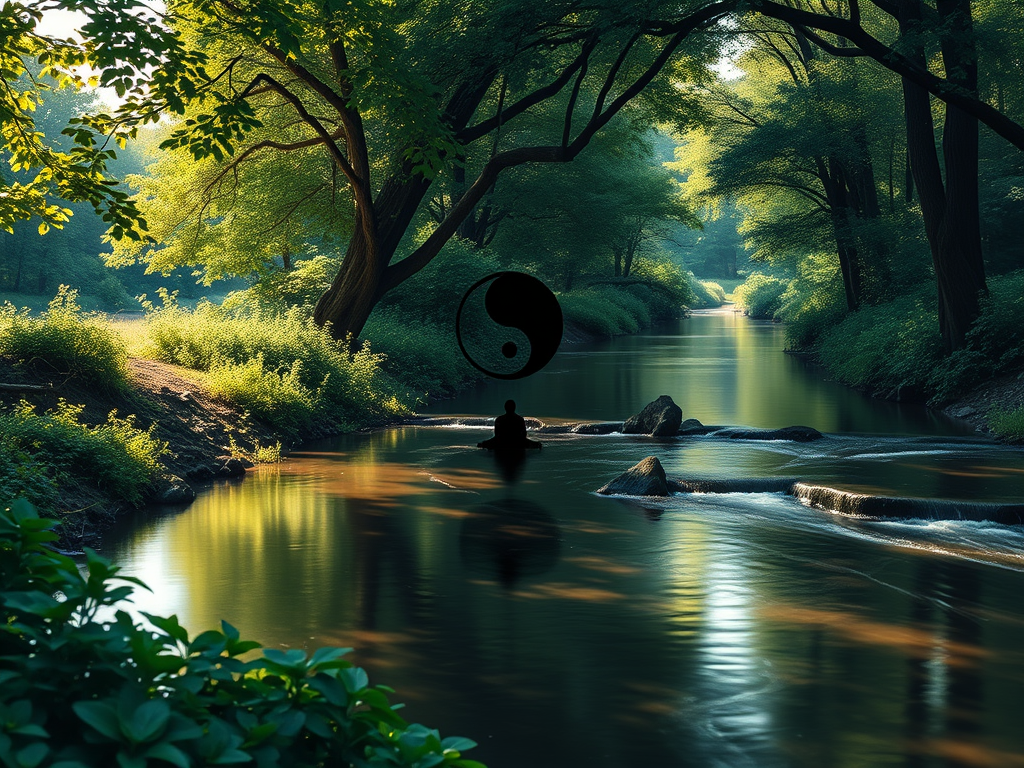
Breath as Medicine: Qi Gong and Mitochondrial Health

Ask Me Anything Wednesday:

Q: How can practices like Qi Gong breathing influence mitochondrial health and fat metabolism in a way that modern research can measure?

A: The ancients spoke of breath as the bridge between heaven and earth, the unseen rhythm that nourishes both body and spirit. In Taoist practice, Qi Gong breathing is more than oxygen exchange. It is a deliberate art of guiding energy through the body, aligning the nervous system with the cycles of nature. Where modern science measures mitochondria—the tiny power plants of our cells—Taoist sages saw a glow of life-force. Both point to the same truth: breath is fuel for vitality.

Modern studies reveal that slow, deep diaphragmatic breathing reduces stress hormones and increases oxygen efficiency, creating an environment where mitochondria thrive. When breath is shallow and erratic, cells are starved and fatigue becomes the norm. Qi Gong’s measured inhales and flowing exhales cultivate a steady supply of oxygen while lowering the body’s energy drain from stress. The effect is not abstract—it is measurable in improved VO2 max, reduced inflammatory markers, and enhanced mitochondrial function.

There is also a metabolic dimension. Research shows that controlled breathing practices can shift the body toward fat metabolism by influencing oxygen delivery and energy pathways. Taoists described this as “burning the dense fuels of the body” to release lighter, clearer energy. What they intuited centuries ago, biochemistry now explains: efficient mitochondria use fat as a primary fuel, improving endurance, body composition, and overall resilience.

Perhaps the greatest gift of Qi Gong breathing is its accessibility. No equipment is needed, only intention. A simple daily practice—ten minutes of slow belly breathing, eyes softened, mind settled in the present—nourishes mitochondria, steadies the heart, and awakens clarity. In a world driven by complexity, the Tao reminds us that the most profound medicine may be the simplest: breathe with awareness, and life itself becomes the healer.

Ask Me Anything Wednesday for August 6 2025

QUESTION: “Can combining specific breathing patterns with herbal remedies enhance their absorption and therapeutic effects in the body?”

ANSWER: The idea of combining specific breathing patterns with herbal remedies is rooted in both ancient and emerging sciences. In traditional systems like Taoist medicine, Ayurveda, and Tibetan healing, breath is considered a carrier of life force (Qi, Prana, or Lung) that can direct and amplify the effects of plant medicine. Modern physiology supports this concept by showing that breathing influences circulation, oxygenation, and autonomic nervous system balance — all of which can impact digestion, nutrient absorption, and the way phytochemicals are delivered to tissues. Slow, rhythmic breathing activates the parasympathetic nervous system, shifting the body into a “rest and digest” state, which optimizes the assimilation of herbal compounds.

Certain breathing techniques may also enhance specific aspects of herbal therapy. For example, diaphragmatic breathing increases blood flow to the abdominal organs, improving liver and intestinal function — critical areas for processing and absorbing plant constituents. Pairing calming herbs like chamomile, lemon balm, or holy basil with gentle, deep breathing before and during consumption could enhance their relaxing effects. Conversely, pairing stimulating herbs such as ginseng or rhodiola with energizing breath patterns, like rapid bellows breathing or short breath retentions, might amplify their invigorating qualities by boosting circulation and activating the sympathetic nervous system in a controlled way.

For practical application, timing and intent matter. A practitioner could guide a patient to take a few minutes of specific breathwork before ingesting a herbal tea, tincture, or capsule, using the breath to “prime” the body’s receptivity. This could be as simple as inhaling for a count of four, holding briefly, and exhaling for a count of six for calming herbs — or adopting short, strong inhalations and exhalations to prepare for adaptogenic or stimulating herbs. Over time, this pairing can create a learned body response, where the breath pattern itself becomes a signal that it is time to receive and integrate plant medicine. This approach blends the subtle art of energetic medicine with the measurable science of breath physiology, offering a new frontier for natural healing.

Peace Within, Peace Without: A Taoist View of the Microcosm and Macrocosm

When the waters within are still, the world around reflects that stillness. This is a central truth in Taoism — that the inner and outer are not separate, but echoes of the same stream. Just as a single drop of dew contains the pattern of the whole sky, what stirs within us shapes the sky we live beneath. The microcosm, our inner realm, mirrors and is mirrored by the macrocosm — the greater world.

A heart clouded with fear sees danger in every corner. A mind tangled with restlessness finds chaos in every encounter. But when the breath flows gently, when the spirit is calm, a kind of invisible order reemerges. This isn’t fantasy or wishful thinking. It is the Tao in motion — the invisible thread connecting your pulse to the rhythm of the stars, your thoughts to the tide of seasons, your intention to the unfolding of events.

To live in accordance with the Tao is not to escape the world, but to harmonize with it. We cannot control the storm, but we can become the stillness at its center. And from that stillness, strange magic happens: situations resolve, tension softens, people respond differently. What begins as an inward shift becomes an outward ripple. This is why Taoist sages focus not on conquering the world, but on aligning their own energy with the Way.

Equally, when the world is in turmoil, it is often a reflection of the unrest within its people. Collective fear, unchecked desire, and spiritual disconnection manifest as conflict, pollution, and imbalance. To heal the world, we must heal our inner landscape. Each act of returning to center — a quiet breath, a compassionate thought, a small surrender — plants a seed in the outer world. In this way, personal peace becomes a revolutionary act.

So let us walk gently, cultivating balance in the garden of our own lives. Let us clear the river of thought so it may reflect the sky clearly. The Tao does not ask for perfection, only harmony. And when we find it within, we will see it again and again — in the curve of the moon, in the smile of a stranger, in the way the wind stirs the leaves just as we find peace in our hearts.

Question of the Week 5/30/25

Can Emotions Really Make Us Sick? If So, How Do We Heal Naturally?

Answer:

In natural medicine, there is a growing recognition that unresolved emotions do not just influence us. They become part of our physical reality. But can grief, anger, fear, or shame truly turn into illness? This is not just poetic language. It is a real phenomenon with roots in both ancient traditions and modern science.

Traditional Chinese Medicine teaches that every organ is linked to a specific emotion. The liver is tied to anger, the lungs to grief, the kidneys to fear, and the heart to joy. When emotions are not processed, they create stagnation in the body. This is not metaphor. Chronic stress raises cortisol, weakens immunity, alters digestion, and disrupts the nervous system. Emotions become chemistry. They tighten fascia, shift posture, disturb sleep, and silently build the foundation for chronic conditions.

Natural healing begins with movement and breath. Qi Gong, Bagua, and somatic techniques help the body unwind. Herbs like Holy Basil ease the mind. Schizandra nourishes the spirit. Reishi supports the heart and promotes deep calm. Meditation also plays a key role. It allows emotions to rise without resistance. This is not about pushing feelings away. It is about creating space to let them pass through.

The real lesson is this. Your body is not betraying you. It is speaking to you. Symptoms are not enemies. They are messages. When we meet emotions with awareness instead of suppression, healing begins. And nature is always ready to guide the way back to balance.

UPDATE: To go deeper into this work, explore my Bagua and Sacred Sounds course—a unique blend of circular martial movement and healing vibration. This course is designed to release trapped emotions, activate energy centers, and restore your inner rhythm. It is not just exercise. It is transformation. Enrollment opens Sunday, June 1. Begin your journey at:

Why Sacred Sounds Are the Missing Link in Modern Wellness

By Dr. David Orman | davidorman.com

In the rush for new wellness trends — cryotherapy, cold plunges, red light therapy — we often forget the most powerful healing tools are the oldest. Sacred sounds don’t come in a bottle or device. They come from within. And they may be the most underutilized force in your wellness arsenal.

This isn’t esoteric fluff. It’s physics. Everything in your body — every cell, tissue, and organ — vibrates at a specific frequency. Disease begins when these vibrations fall out of sync. Sacred sounds recalibrate the body’s energetic tuning fork. It’s not magic. It’s resonance.

SOUND: The Most Overlooked Form of Self-Regulation

We obsess over supplements and macros, but few consider how sound impacts our biology. Yet studies show that vocal toning can reduce inflammation, improve lymph flow, and even lower blood pressure. Sound is instant. It doesn’t need to be digested or processed. It enters the system and shifts it.

Sacred sounds target more than muscles or metabolism. They work directly with the autonomic nervous system — the invisible commander of stress, digestion, immunity, and sleep. When you hum, chant, or tone, you’re not just making noise — you’re hacking your own internal software.

THE VOICE AS MEDICINE

You don’t need training. You don’t need talent. All you need is your voice and five minutes a day. Try chanting “Sssss” slowly for the lungs. “Shhhhh” for the liver. Each sound corresponds to an organ system, rebalancing it in real time. These aren’t random syllables. They’re precision instruments for human optimization, used for thousands of years in Taoist medicine.

The best part? There’s zero downside. No side effects. No cost. No barrier to entry. Just pure, effective, vibration-based therapy you can do from anywhere — your car, your shower, your office.

MODERN LIFE IS LOUD. SACRED SOUND IS SILENTLY POWERFUL.

Noise pollution. Screentime. Dopamine addiction. We’re overstimulated and under-attuned. Sacred sounds are the reset. The pause. The return. They’re the ancient tech that modern life desperately needs.

Forget chasing the next health trend. Go back to what’s eternal. Your breath. Your voice. Your frequency.


Want to learn the full system of Taoist Sacred Sounds for healing, balance, and inner mastery?
Visit davidorman.com or email david@davidorman.com to explore the course that’s changing lives from the inside out.

The Transformative Benefits of Sacred Sounds


By Dr. David Orman | davidorman.com

In every culture, from the ancient temples of Tibet to the echoing cathedrals of Europe, sacred sounds have been used to awaken, heal, and align. They are more than chants or vibrations — they are living frequencies that speak the language of the soul and harmonize the unseen.

1. Healing the Body

Sacred sounds initiate profound shifts within the physical body. Specific frequencies resonate with internal organs, tissues, and cellular systems. In Taoist tradition, each organ has a corresponding healing tone — such as “Ssssss” for the lungs or “Shhh” for the liver — that helps release stagnation, cool inflammation, and energize function. These sounds act like acupuncture without needles, dissolving tension and restoring equilibrium from within.

Scientific studies have shown that vocal toning can regulate heart rate, reduce cortisol levels, and improve oxygen flow. Sound bypasses mental resistance, delivering calm directly into the nervous system. When practiced regularly, sacred sounds can contribute to deeper sleep, faster healing, and improved immunity.

2. Balancing Emotions

Emotions are energy in motion — and when they stagnate, we suffer. Sacred sounds act as vibrational medicine for the emotional body. Tones like “Aaaah” (linked to the heart) can dissolve grief or resentment. “Hoooo” (associated with the spleen) helps ground worry and overthinking.

When chanted with breath and presence, these sounds release old emotional residues stored in the organs. This inner cleansing leaves space for clarity, peace, and presence. Over time, the practitioner becomes less reactive, more centered, and emotionally resilient.

3. Awakening Creativity

Sound is the bridge between form and formlessness. Sacred sounds ignite creativity by activating the energy centers — especially the throat and solar plexus, where expression and personal power reside. Chanting tones like “Eee” or “Yuuu” can open new dimensions of intuition, artistic flow, and confident self-expression.

Unlike structured practices that require technique, sound is instinctual. Anyone with a voice can begin. And once creativity awakens, it infuses all aspects of life — from problem-solving to writing, painting, or even conscious relationships.

4. Deepening Spiritual Connection

Sound connects us to the sacred. The resonance of chanting “OM” or “HU” aligns the practitioner with the universal field. It calms the mind and lifts awareness beyond the personal. Many who practice sacred sound meditation report states of inner stillness, visionary insight, or feelings of oneness.

The voice becomes a vehicle for the soul. Each tone is a prayer, a purification, and a return to what is eternal. Sacred sounds don’t just heal — they transform. They are invitations to remember the truth of who we are.


Begin with Breath. Speak with Intention. Let Sound Guide You Home.
For guided practices and training in Taoist sacred sound therapy, visit davidorman.com or reach out directly at david@davidorman.com.

Copyright 2025