Keyboard Diseases: How Hidden Hands Are Rewiring Our Minds

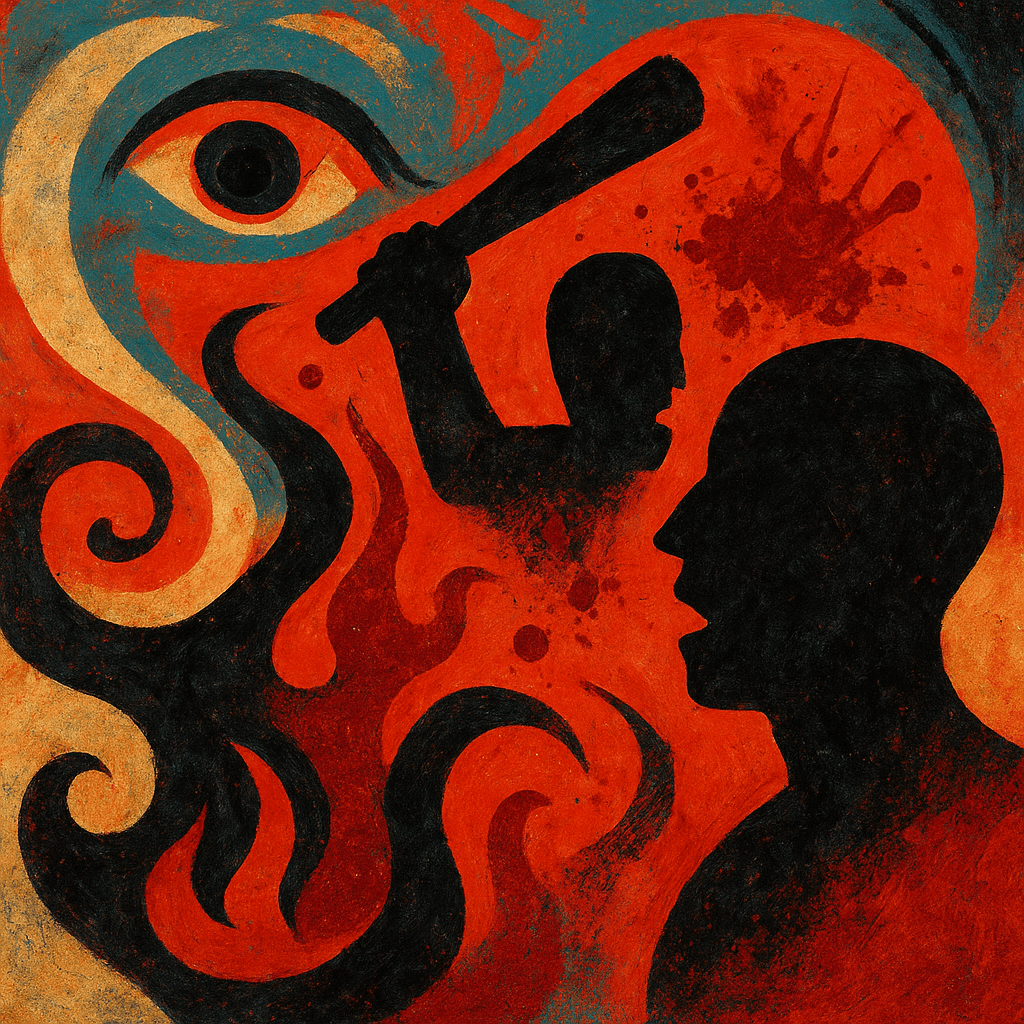
We live in an age where many of us are healthier in body than ever before but what about the health of how we think, act, and engage with others? There is a subtle epidemic, one with no physical symptoms yet capable of warping character, relationships, and the very way we see truth. I call them “keyboard diseases.” They compulsive online behaviors that destroy empathy, distort courage, and replace authentic action with keyboard echo. In the grip of this, we drift from being human to being a keyboard, typing out versions of ourselves we barely recognize.

Here are examples of this:

At first glance, cell-phone addiction seems benign, a modern (in)convenience. But it is not neutral. Every ping, every notification, pulls attention away from the sweet Now. Like an itch we cannot help scratching, our thumbs swipe, our focus splinters, and presence recedes. Then comes the hidden rant: the furious keyboard warrior who would never speak such things in person yet fires off messages when behind the safety of screens, comforted by distance and anonymity. Add to that the darker seeds: plotting harm, orchestrating divisive narratives, and using digital tools to hide intentions. These are not fringe phenomena—they are daily nuisances, internal viruses eating at virtue and clarity.

Beyond them lies another terrain, that of digital vigilantism and “echo chambers.” We now have armies of moral judges ready to pounce via screenshots, threads, and mass shaming. What starts as righteous indignation quickly becomes ritual bloodletting. Parallel to that, we collapse into echo chambers where the subtle is erased and complexity punished. We only share what confirms what we believe, we only hear what soothes our self-image. It someone disagrees, the mass of nasty verbiage comes raining down from the hidden keyboard.

And then there is doomscroll dependency, the addictive consumption of negative, fear-laden content. We ride each headline like a wave of anxiety, honing a worldview in which everything is crisis, betrayal, and collapse.

To understand why so many fall prey, we can learn a great deal from behavior science, especially the work of one of my favorites, Chase Hughes. Hughes, a former military intelligence officer turned behavior specialist, teaches that much of what we believe is our free choice is shaped (often invisibly) by how we process others, how we read signals, how we allow fear and insecurity to lead us. He teaches tools like the Behavioral Table of Elements (a framework for observing nonverbal cues, clusters of stress, and patterns of deception). He emphasizes that communication is not just in the words, but in posture, eye movement, voice tonality, all tools that both others and we ourselves use to influence perception.

This helps explain why “keyboard diseases” take root so easily. Behind the keyboard, people hide much (all?) of the nonverbal self. They strip away the cues that force accountability: the eyes that look away, the voice that quivers. They amplify what they think but rarely test, choosing content that confirms rather than challenges.

People then are easier targets for manipulation, both by others and by ourselves, because we believe our own posture is safe, our own rationality intact. Hughes warns of the “firewall illusion,” the false belief that one is immune to manipulation; ironically, believing that makes us more vulnerable.

Yet there is hope. Recognizing these “keyboard diseases” is the first step back to integrity. We can begin to reclaim our humanity by slowing down, by insisting on face-to-face communication from time to time, by stepping into conversation rather than comment threads. We can practice observing behavior, ours first, then others, like Hughes suggests. Notice how we sit, how we look, what our default gaze is, journaling small signals of discomfort or fear. We can challenge ourselves to consume what uplifts, not only what enrages. We can question what we share, and to pause before we type.

In the end, we are more than keyboards, more than screens or threads. We are bodies, minds, hearts — responsive, relational, vulnerable. These “keyboard diseases” steal from us not just civility, but presence, compassion, and the subtle courage of living fully. To heal, we need to put the keyboard in its proper place and recognize it as a tool, not a refuge. A mirror, not a mask. A servant, not a sovereign. Returning to that posture may seem small. But it is the ground on which true transformation grows.

It is the key to returning to a heart driven, compassionate society.

Part 2: From A Western Psychological View of Rejoicing in Violence

From a psychological standpoint, celebrating or enjoying the killing of someone purely for holding a different political view often stems from dehumanization and moral disengagement. When people begin to view opponents not as human beings but as dangerous “others” or as symbols of a hated ideology, empathy is switched off. This process allows individuals to perceive violence as justified—or even virtuous—because they believe the target represents a threat to their identity, values, or group survival. Social media echo chambers and polarizing news sources can intensify this effect by amplifying anger and portraying the other side as an existential enemy rather than as complex human beings.

A second factor is authoritarian or extremist thinking, which thrives on rigid black-and-white worldviews. People with these traits often crave certainty, hierarchy, and a simple moral order. Political opponents are seen not merely as people with different opinions but as “evil” forces to be eradicated. This mindset can create a psychological environment where violence feels not just acceptable but heroic, especially if the person believes they are protecting their in-group or a sacred cause. When combined with personal grievances, resentment, or feelings of powerlessness, this belief system can turn abstract hatred into a desire for literal harm.

There is also a strong emotional and identity component. For some, political identity becomes a core part of self-definition. When that identity feels threatened, the brain can react as though under physical attack, triggering fight-or-flight chemistry—adrenaline, cortisol, and aggressive impulses. In this heightened state, moral reasoning weakens and celebration of violence can feel like emotional vindication. Research shows that witnessing harm to an out-group can even activate the brain’s reward circuits if the person strongly identifies with an opposing group and perceives the harm as retribution.

Finally, social reinforcement and cultural narratives play a critical role. If peers, online communities, or influential figures applaud or glorify violence, individuals receive validation for destructive feelings. Over time, repeated exposure to such reinforcement dulls natural empathy and normalizes brutality. In this way, celebrating the murder of someone with different political views is rarely about politics alone; it is the end result of psychological processes—dehumanization, rigid thinking, threatened identity, and group validation—that strip away empathy and elevate aggression into a twisted form of moral triumph.

The Living Stream: A Unique Journey Through the History of Taoism

Taoism flows not from a single historical moment but from the deep wellspring of ancient Chinese wisdom. Its origins are lost in mist, like the Tao itself. Long before it was written down, Taoism lived in the songs of farmers, in the silence between mountain winds, and in the movements of those who observed nature instead of trying to conquer it. It is often linked to the legendary figure Laozi, whose Dao De Jing became a poetic blueprint for living in harmony with the universe. But Taoism is older than any book. It is a worldview, a rhythm, a way of seeing life not as parts but as an ever-changing whole.

By the fourth century before the common era, Taoism stood alongside Confucianism and Legalism as one of the major schools of thought in China. But unlike its rivals, it did not become rigid or authoritative. It spoke instead of effortless action, of alignment with the natural flow of existence. Philosophers like Zhuangzi expanded Taoism with parables and humor, using strange images and dreamlike stories to reveal hidden truths. A butterfly’s dream, a butcher’s perfect cut, the laughter of sages, each opened a door to the Tao, the path beneath all things.

Over time, Taoism evolved. It became not only a philosophy but a living tradition, rich with rituals, breathing techniques, sacred movements, and inner alchemy. Monasteries were built high in the mountains. Stories of immortals passed from generation to generation. Taoist healing practices merged with traditional medicine, martial arts, and astrology. It remained fluid, absorbing and adapting while staying true to its original essence. Whether through silent meditation or temple rituals, Taoism remained close to the pulse of everyday life.

Today, Taoism speaks gently to a chaotic world. It does not shout for attention or seek control. Instead, it invites the seeker to observe, to soften, and to return to simplicity. It reminds us that true power often lives in stillness, that nature contains more wisdom than any machine. In an age that races ahead, Taoism offers a path of return. The Tao continues, unseen but always present, eternal and whole.

Peace Within, Peace Without: A Taoist View of the Microcosm and Macrocosm

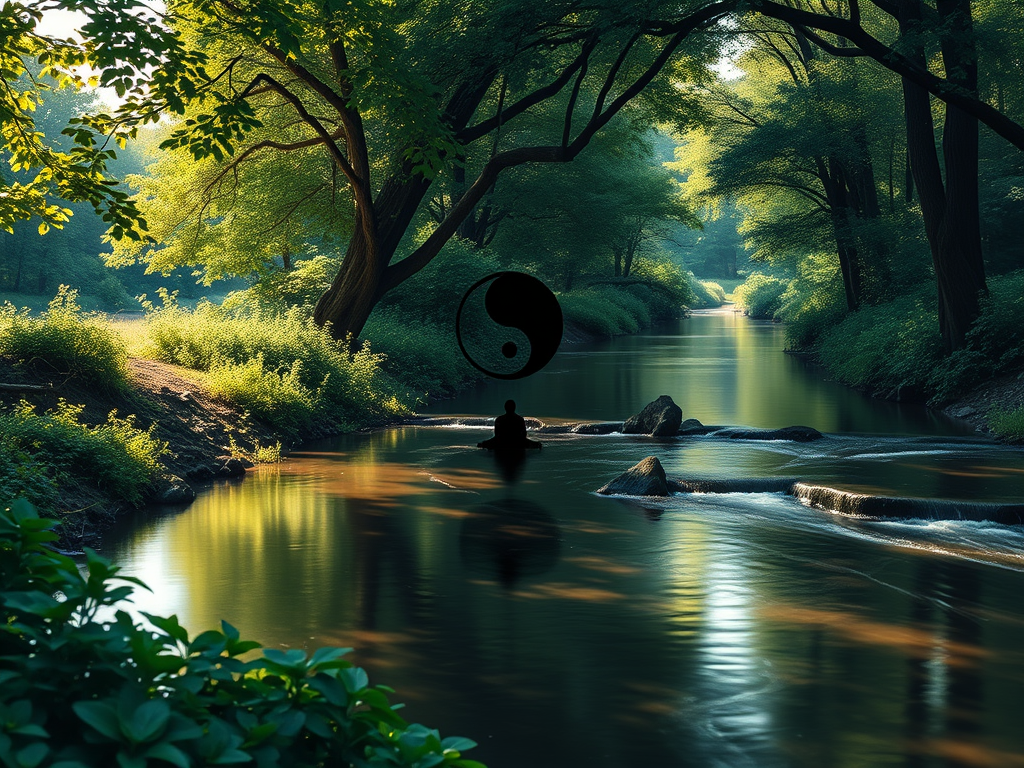
When the waters within are still, the world around reflects that stillness. This is a central truth in Taoism — that the inner and outer are not separate, but echoes of the same stream. Just as a single drop of dew contains the pattern of the whole sky, what stirs within us shapes the sky we live beneath. The microcosm, our inner realm, mirrors and is mirrored by the macrocosm — the greater world.

A heart clouded with fear sees danger in every corner. A mind tangled with restlessness finds chaos in every encounter. But when the breath flows gently, when the spirit is calm, a kind of invisible order reemerges. This isn’t fantasy or wishful thinking. It is the Tao in motion — the invisible thread connecting your pulse to the rhythm of the stars, your thoughts to the tide of seasons, your intention to the unfolding of events.

To live in accordance with the Tao is not to escape the world, but to harmonize with it. We cannot control the storm, but we can become the stillness at its center. And from that stillness, strange magic happens: situations resolve, tension softens, people respond differently. What begins as an inward shift becomes an outward ripple. This is why Taoist sages focus not on conquering the world, but on aligning their own energy with the Way.

Equally, when the world is in turmoil, it is often a reflection of the unrest within its people. Collective fear, unchecked desire, and spiritual disconnection manifest as conflict, pollution, and imbalance. To heal the world, we must heal our inner landscape. Each act of returning to center — a quiet breath, a compassionate thought, a small surrender — plants a seed in the outer world. In this way, personal peace becomes a revolutionary act.

So let us walk gently, cultivating balance in the garden of our own lives. Let us clear the river of thought so it may reflect the sky clearly. The Tao does not ask for perfection, only harmony. And when we find it within, we will see it again and again — in the curve of the moon, in the smile of a stranger, in the way the wind stirs the leaves just as we find peace in our hearts.